Independent · Cited · Human-reviewed
DIY atmospheric water for homes with poor tap quality
The Air-to-Water Home Guide documents how cost-conscious households harvest drinking water from indoor humidity using HVAC condensate, off-the-shelf filtration, and cited safety limits—not $3,000 countertop machines.
The multi-barrier train
Flow order- 01
Humid indoor air
Coil or dehumidifier condenses vapor
- 02
Sediment stage
5–20 µm cartridge removes fines
- 03
Carbon block
Reduces taste, odor, and VOCs
- 04
UV disinfection
254 nm at rated flow
- 05
Opaque storage
Sealed HDPE, kept cool and dark
- 2
- Pillar hubs
- 5
- In-depth guides
- 1
- Calculators
- 4+
- Sources per guide
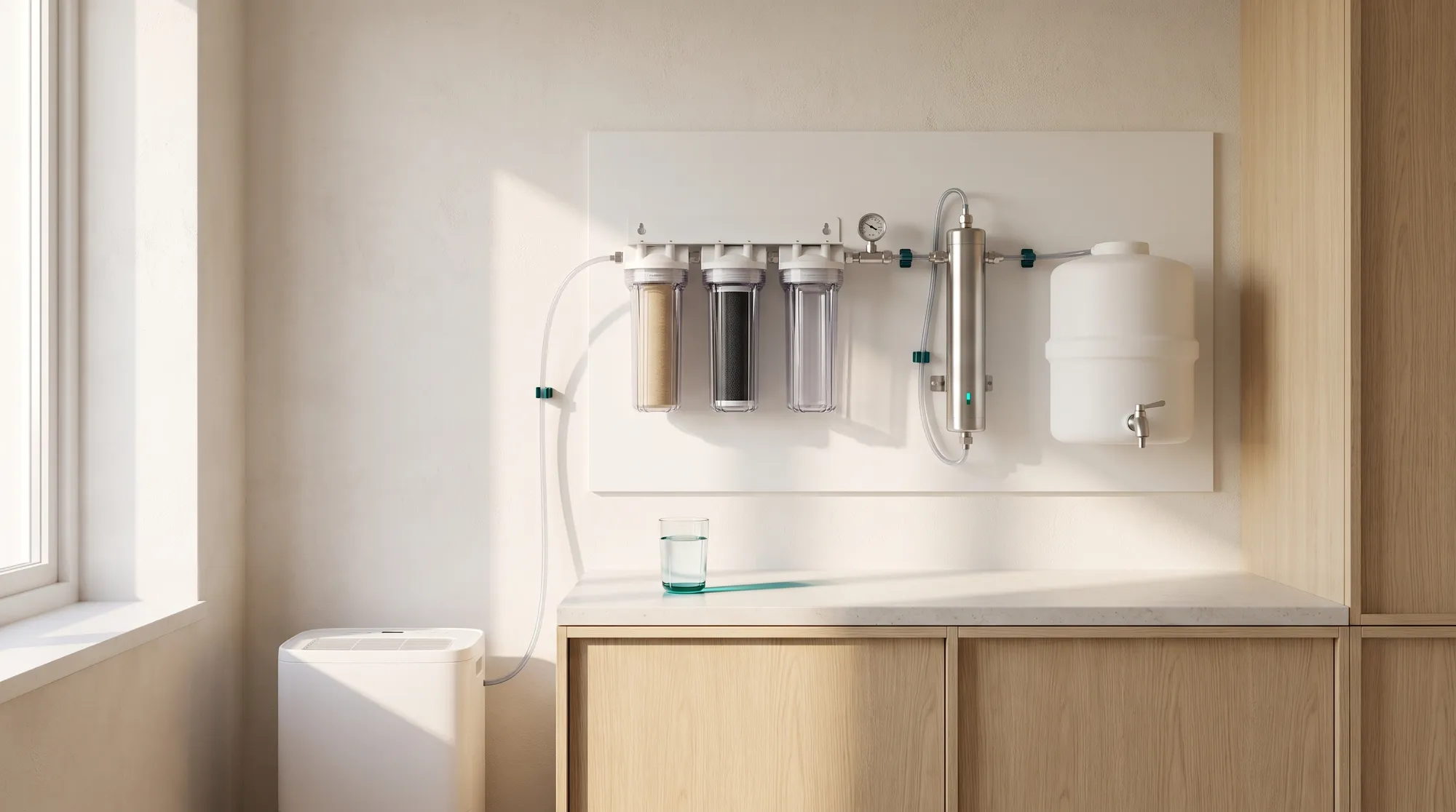
What a finished build looks like
Collection, three barriers, sealed storage
Dehumidifier condensate passes sediment and carbon stages, then UV, before it reaches an opaque tank.
See every part in the buildHow we work
Three steps before anyone pours a glass
Model the yield, engineer the barriers, then prove the water is safe. Never invert that order.
The library
Start with the parts list, then go deep
Air-to-Water Systems
Is Condensation Safe to Drink? How to Sanitize Water Harvested From Air
Biofilm, Legionella risk, and the minimum treatment train for AC condensate used as drinking water.
Read the guideBudget Water Harvesting
Choosing the Right Diaphragm Pump for DIY Water Filtration
Flow rate, head pressure, and duty cycle for 12 V pumps pushing water through multi-stage cartridges.
Read the guideBudget Water Harvesting
Algae-Free Storage: How to Safely Store Harvested Drinking Water
Light exclusion, HDPE tank sizing, and float-switch automation for long-term condensate storage.
Read the guideAir-to-Water Systems
Testing DIY Water Purity: How to Ensure Your Home-Harvested Water is Safe
TDS baselines, coliform screening, and when to send a sample to a certified lab.
Read the guidePillar topics
Two subsystems, one safe glass of water
Air-to-Water Systems
Physics, components, and safety limits of residential atmospheric water harvesting.
- DIY generator parts list
- Sanitizing condensate
- Testing water purity
Budget Water Harvesting
Low-cost plumbing, storage, and testing workflows for condensation-based drinking water.
- Choosing a filtration pump
- Algae-free storage
Free tool · Runs in your browser
Will your home make enough water to matter?
Estimate liters per day from relative humidity, temperature, and collector area before buying hardware. No account, no server round-trips.
Run the yield calculatorRelative humidity
55%
Air temperature
78°F
Collector area
12 sq ft
Run time
10 h/day
Editorial standards
Research-grade, not marketing copy
Rankings and safety guidance are not for sale. Affiliate links appear on decision pages only, always disclosed.
Technical SEO engineer · Lead author
Primary sources first
EPA, CDC, WHO, and NSF/ANSI standards before vendor manuals.
Human review
Every guide is checked by Mateo García for numbers and missing hazards.
Six-month update cycle
Re-reviewed on schedule and immediately when cited guidance changes.